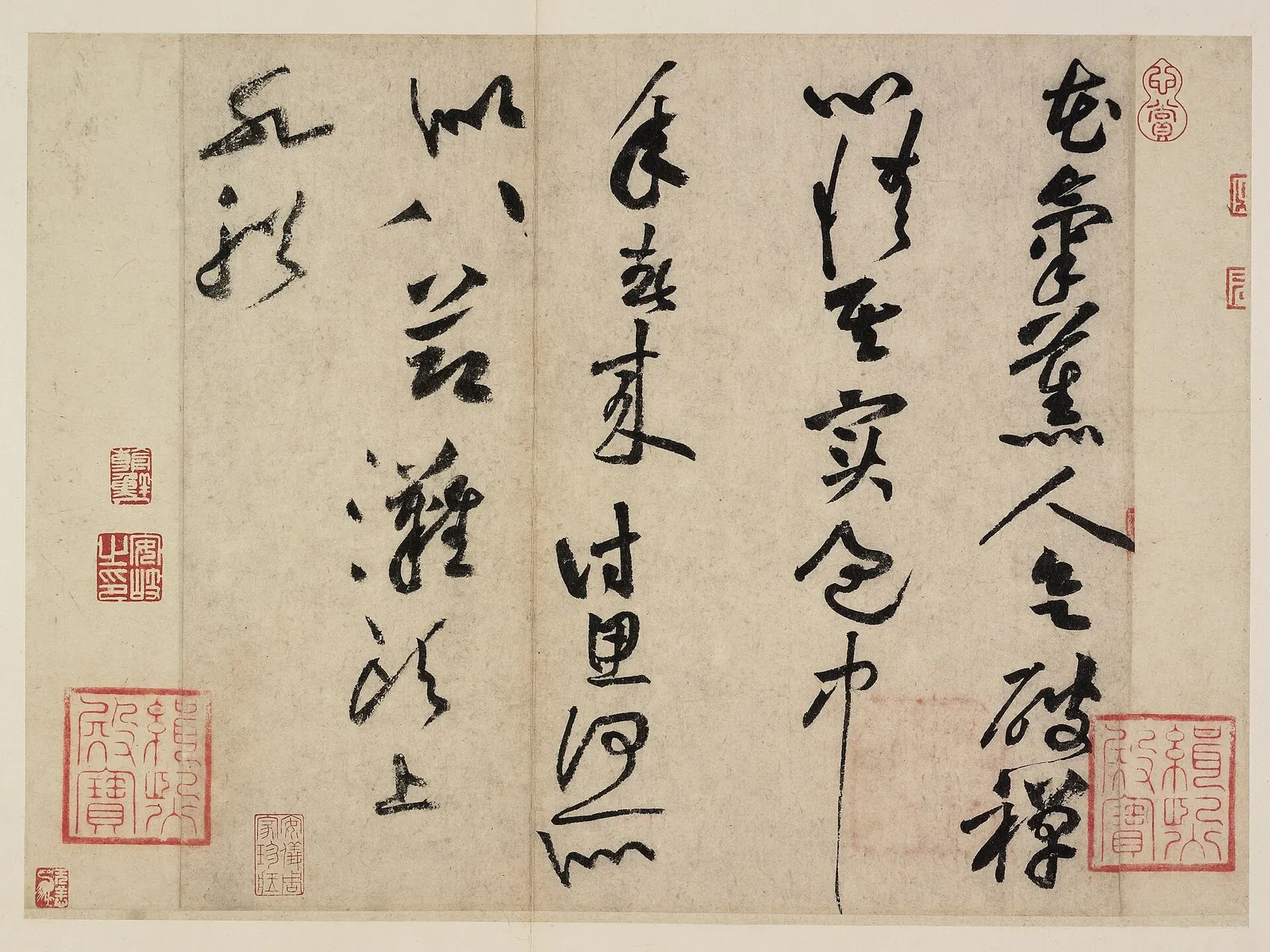
When someone asks which languages a translation desk handles, the honest answer is that languages rarely travel alone. Work is planned, quoted and checked in pairs: a source language and a target language, with a direction attached. Mandarin into English is a different task from English into Mandarin, and the difference is not only grammar. It is readership, expectation and the small conventions that make a text sound as though a person wrote it rather than a machine converted it.
The languages that meet most often
In Asian–European work a fairly small group of languages appears again and again. On the Asian side, Mandarin Chinese, Cantonese, Japanese and Korean cover most requests, with Thai, Vietnamese and Malay and Indonesian appearing regularly in trade, travel and manufacturing contexts. On the European side, English dominates as both a target and a pivot, followed by French, Portuguese, Spanish, German, Italian and Dutch.
English is often the bridge: a Japanese document is rendered into English, and the English version becomes the source for a Portuguese or German one. That saves time, but it also adds a step where meaning can drift. Whenever a project allows it, translating from the original language gives a more reliable result. You can read more about how we approach that in translation work and interpreting.
Scripts are not decoration
Every pair has its own practical obstacles, and scripts are the first of them. Japanese uses kanji alongside two syllabaries, hiragana and katakana. Korean is written mainly in hangul, with Chinese characters still appearing in some academic, legal and ceremonial texts. Chinese has two standard character sets, simplified and traditional, and Cantonese writing often uses characters that a Mandarin reader would not expect. Vietnamese moved to a Latin alphabet with diacritics, which makes typesetting easier but does not make the language any closer to European ones in structure.
These details affect layout, line breaks, fonts and file formats as much as wording. A short Chinese headline can occupy a third of the space of its English equivalent, or three times as much, depending on the pair and direction. Our desktop publishing notes cover how that is handled in practice.
Where vocabulary is shared
Some pairs are easier than others because history left them a common stock of words. Chinese characters travelled across East Asia over many centuries, so Japanese, Korean and Vietnamese all hold layers of vocabulary borrowed from Chinese. A compound written with the same characters may be recognisable in all three languages, even though it is pronounced quite differently in each. That is a genuine advantage in technical and legal texts — and a trap, because the same compound can carry a narrower, wider or simply different meaning in one language than another.
On the European side, English carries a large French and Latin layer, which is why English and French, and English and Portuguese, share thousands of recognisable words. Portuguese, Spanish, French and Italian are close enough that a reader can often guess at a sentence in a neighbouring language. Shared vocabulary speeds up drafting, but it also produces false friends that only careful reading catches.
Where almost nothing is shared
Put Japanese and Portuguese together and the shared ground nearly disappears. Portuguese was the first European language to reach Japan, in the sixteenth century, and it left a small handful of everyday words — pan for bread, karuta for playing cards. Beyond that, the two languages work in completely different ways: Japanese is agglutinative, builds long verb forms, marks topics rather than subjects, and encodes social distance in its grammar. Portuguese inflects heavily and expects agreement throughout a sentence.
Pairs like Korean and French, or Cantonese and German, behave similarly. Translation there is not substitution but rewriting: the translator has to rebuild the argument in the target language rather than carry words across. This is where machine output fails most visibly, and where a second reader is worth the time.
Register: who is speaking to whom
Register matters as much as vocabulary. Japanese has systematic honorific speech; Korean distinguishes several levels of politeness and changes verb endings accordingly; Chinese marks respect with choices such as 您 rather than 你. French and German have their own familiar and formal forms of address. English, by contrast, flattens much of this into a single “you”, so a translation into English loses information that the original carried, and a translation out of English has to invent a relationship the source never stated.
For that reason we ask about the reader, not just the text. A manual, a letter to a customer and a speech at a ceremony may say similar things in very different ways.
Choosing and briefing a pair
- State the direction clearly: source language first, target second.
- Say who will read the result, and what they are expected to do with it.
- For Chinese, confirm simplified or traditional characters.
- For Korean and Japanese, mention whether Chinese characters are wanted in the target text.
- Send any earlier translations, glossaries or house terminology, so the wording stays consistent.
- Mention the final format if the text will be laid out in a brochure or on a label.
A short briefing of this kind prevents most of the revisions that would otherwise come back later. If a project involves several languages at once, terminology is best fixed before drafting begins; our references page describes the sources we keep to hand. For background on the languages themselves, see the Chinese pages and the overview of subject areas we work in. Questions about a specific pair are welcome through the contact page.