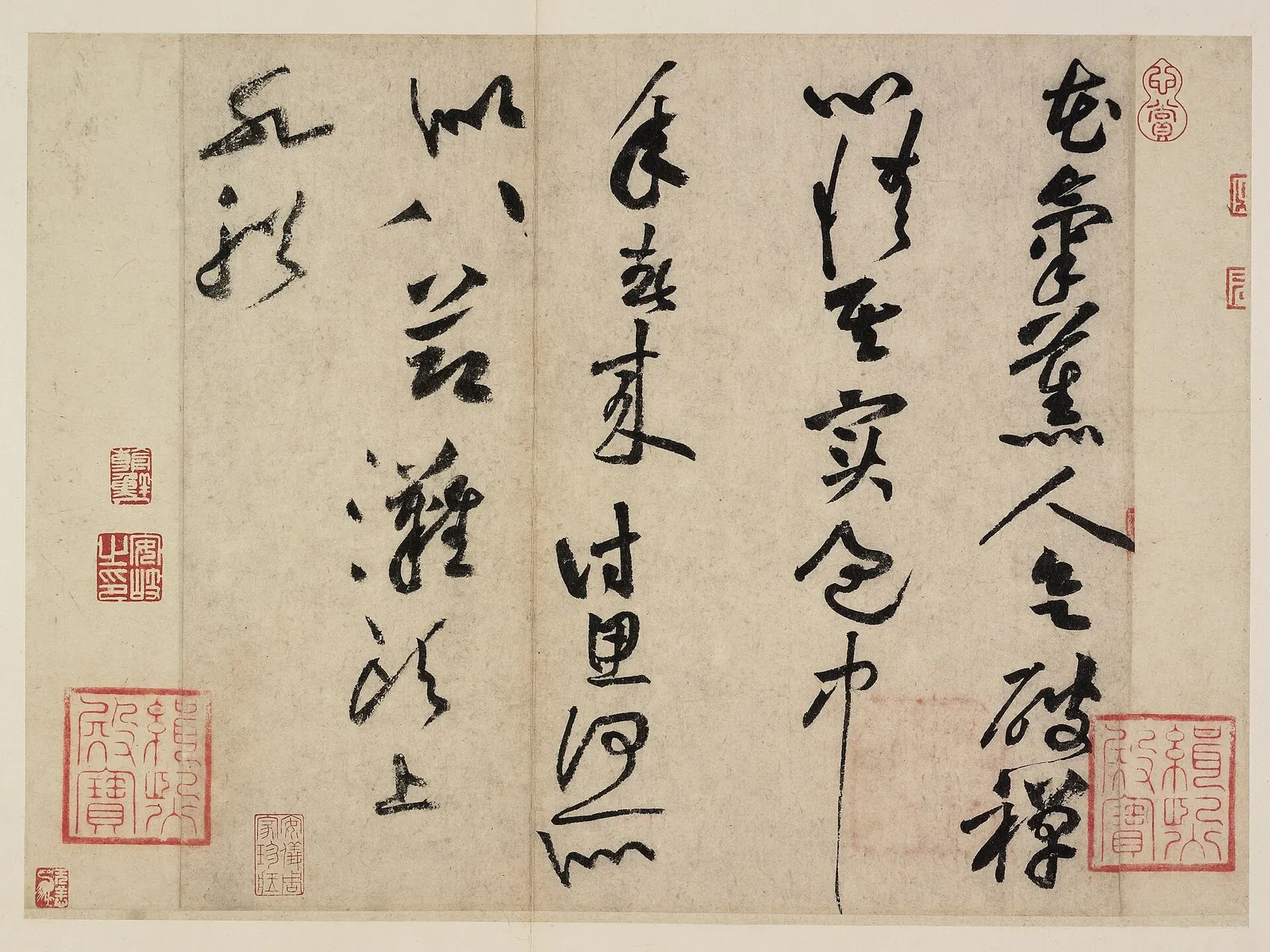
Chinese often appears on a project brief as a single item, but the real choices begin before the first sentence is translated: which script, which regional standard, and which register the reader expects. This page sets out what those choices mean in everyday work between Chinese and European languages.
Two scripts, one writing system
Simplified characters were introduced in mainland China in the 1950s and 1960s to make reading and writing easier to learn, and they are now the everyday form in mainland China, Singapore and Malaysia. Traditional characters remain in use in Taiwan, Hong Kong, Macau and in many overseas communities. These are not two languages: most characters are identical or differ only in stroke detail, and readers of one form usually manage the other without much trouble.
Conversion is where the difficulty sits. Simplification merged several traditional characters into a single new one, so traditional to simplified is fairly predictable while the reverse direction is not. The character 发 stands for both 發 (to send, to issue) and 髮 (hair); 后 covers 後 (after) and 后 (queen). Software that swaps characters without reading the sentence will choose wrongly often enough to be noticed.
Which Chinese does the reader expect?
Script is only the first question. Taiwan writes traditional characters with its own vocabulary and spelling habits. Hong Kong and Macau also write traditional characters, but Cantonese is the spoken language there, and local texts carry their own terms and sentence patterns. Mainland China and Singapore share simplified script yet not always the same word for the same thing. A text that reads naturally in Taipei can feel slightly foreign in Shanghai even when every character is correct.
The useful question is therefore not "Chinese?" but "where will this be read, and by whom?" A user manual, a museum label and a chat message to customers may all need different answers.
Written and spoken Chinese sit further apart than in English
Written Chinese is compact. It uses four-character set phrases, marks aspect rather than tense with particles such as 了, 着 and 过, and often leaves subjects out when they are obvious. Spoken Mandarin is looser, more repetitive and built around topic and comment. A sentence spoken in a meeting rarely takes the same shape as a sentence in a report.
That gap matters most in interpreting, where the interpreter has to bridge it in real time rather than on the page.
Choices that come up in every project
- Target script and region. Simplified or traditional, and which local vocabulary.
- Names. Chinese names put the family name first; European languages usually reverse that. Many people and companies have a preferred Latin spelling, so it is worth asking rather than inventing one.
- Punctuation. Full-width marks, the enumeration comma 、, and book-title brackets 《》 all behave differently from their European counterparts.
- Terminology. A shared glossary keeps a recurring term stable across documents; see translation for how that fits into a workflow.
- Layout. Chinese sets more meaning per line, so columns, tables and labels often need resizing — the kind of work described under desktop publishing.
Working between Chinese and European languages
Chinese does not mark articles, plurals or tense; English, German, French and Spanish mark all three. Translators therefore add what the source leaves unsaid, which is a judgement rather than a mechanical step. Going the other way, long relative clauses and passive constructions in a European language often read better as two or three shorter Chinese clauses in sequence.
What helps a Chinese project run smoothly
- Say where the text will be read, not just that it is Chinese.
- Send reference material: earlier translations, glossaries, product names, screenshots.
- Note whether the text is printed, displayed or read on a phone.
- Flag anything that must stay in Latin script, such as model numbers or code.
Where to go next
The languages page lists the other Asian and European languages covered here, areas shows how subject matter shapes the work, and history explains how this collection of notes grew. If your question is not answered, write to hello@asiawords-translation.net.