An interpreter hears a sentence once and has to produce it in another language while the room keeps moving. There is no saved file to reopen, no chance to look a word up and come back. That single fact shapes everything else — the modes, the equipment, the preparation, and the way a team of interpreters is organised.
Why interpreting is not just translation out loud
A translator works on a text that stays still. They can read a paragraph ahead, check a term, change a decision three pages later, and hand the result to a second reader. An interpreter works on speech that disappears as it is produced, and the audience is judging the result in the same second it is delivered. Meaning still matters most, but timing, voice, and nerve matter too.
The practical difference shows up in what you prepare. For a translation, you prepare terminology. For an interpreting assignment, you prepare terminology and a plan for what you will do when a term does not come, when a speaker speeds up, or when a joke lands in a way that will not survive the trip.
The four main modes
Consecutive
The speaker talks for a stretch, pauses, and the interpreter delivers that stretch in the other language. This is the default for negotiations, dinners, site visits, and many legal settings. The interpreter takes notes — not shorthand, but a personal system of arrows, symbols and abbreviations that records ideas and links rather than words.
Chunk length is the thing to agree on. Very short chunks keep everyone close but break the flow of a speech; very long chunks sound better but put more weight on the notes. Ten to fifteen seconds per chunk is a common working rhythm in a meeting.
Simultaneous
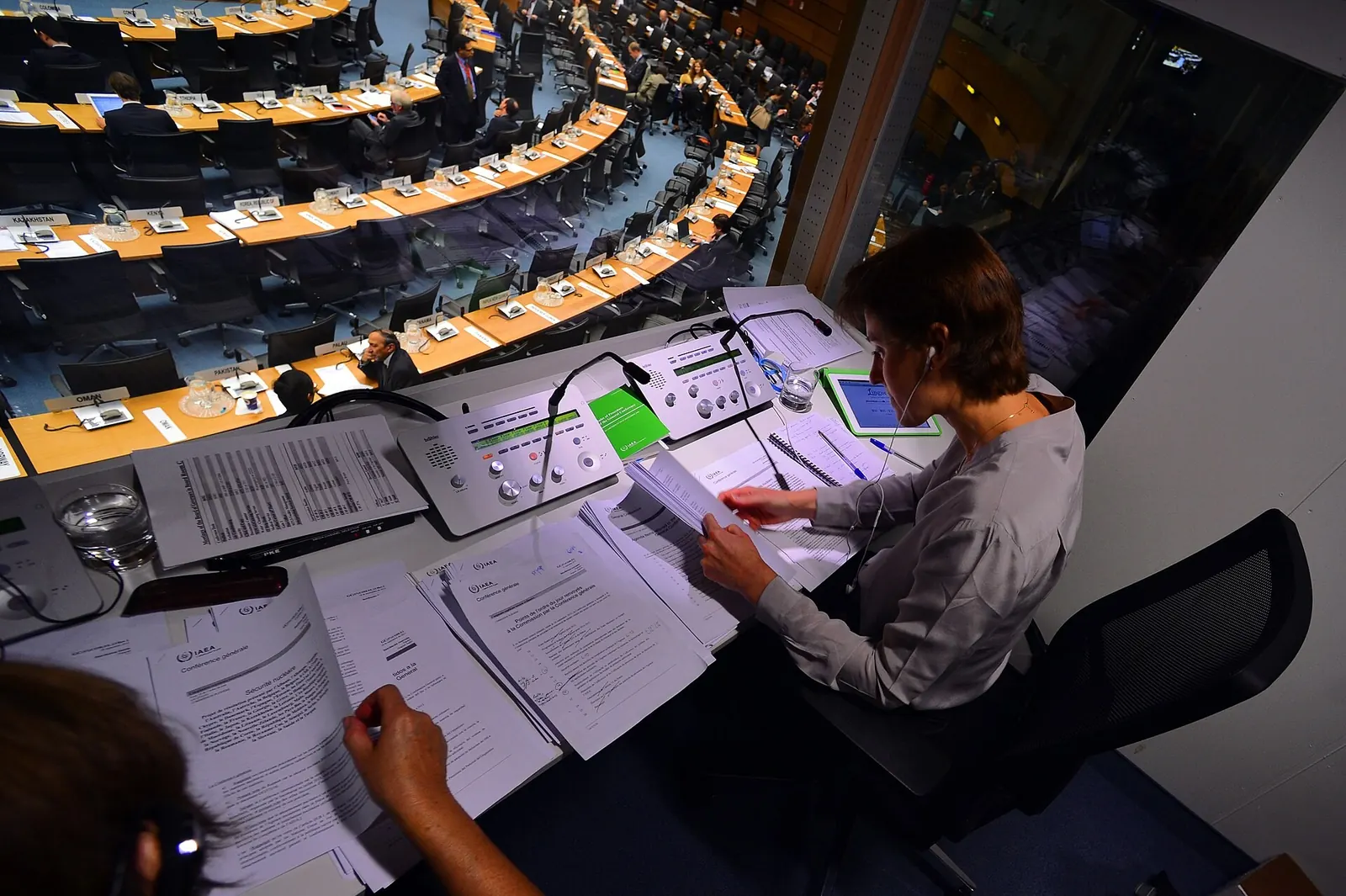
The interpreter speaks at roughly the same time as the speaker, listening and talking together. It is the standard for conferences and large meetings, and it almost always happens from a booth, with the interpreter hearing the room through headphones and sending their voice to listeners through a console. The lag behind the speaker is usually only a few seconds.
Because listening and speaking compete for the same attention, simultaneous work is tiring in a way that is hard to describe to anyone who has not tried it. Interpreters commonly work in pairs, swapping at intervals through a long session, with the inactive partner writing down names, numbers and figures for the one who is on.
Whispered
Sometimes called chuchotage, this is simultaneous work without a booth: the interpreter sits beside one or two listeners and speaks quietly into their ear. It suits interviews, small bilateral talks, and guided visits. It does not scale — beyond two or three listeners the whispering becomes noise for everyone else, and the interpreter's voice suffers.
Liaison and dialogue
Here the interpreter works in both directions, relaying short turns between two or a few people: a buyer and a supplier, a doctor and a patient, an engineer and a technician. The interpreter also manages the conversation — signalling whose turn it is, asking for a repeat, and stopping the two parties from talking over each other. This mode is common in community and public-service settings, where the subject may be sensitive and the stakes personal.
Word order, and why some pairs are harder
Languages that sit close together are easier to interpret between. English, French and Spanish all tend to put the subject first and the verb early, and they build clauses in a similar order, so the interpreter can often start speaking almost immediately.
Japanese and Korean put the verb at the end, after objects and adverbial phrases. In simultaneous mode that means the interpreter cannot safely begin the sentence until they know how it finishes, so they hold material in memory and use anticipation — guessing from context how the verb will go — while keeping a fallback if the guess is wrong. Negation is a particular trap: a sentence can sound entirely positive until the final verb reverses it.
Chinese is verb-medial like English, but modifiers cluster before the noun and verbs carry no tense or agreement. Going into English, the interpreter has to supply what the source leaves unsaid: singular or plural, article or none, past or present. Going the other way, English tenses and articles have to be dropped without losing the time reference. Honorific and politeness levels add another layer — Japanese and Korean verb endings, and the Chinese and Japanese pronouns that shift with the relationship between speakers — and there is often no neat English equivalent.
Numbers, proper names and technical terms are the hardest things to hold, because they cannot be reconstructed from context. Experienced interpreters write them down even in simultaneous mode.
Preparation that actually helps
- A glossary built for the assignment, with the client's own preferred terms.
- Agendas, slide decks, previous minutes and product literature, sent in advance.
- A short briefing on acronyms, internal names and anything the speakers will assume everyone knows.
- Names of the people who will speak, and how they are pronounced.
- Notes on accents, speaking speed, and whether anyone plans to read aloud from a script.
Reading a glossary silently is not enough; saying the terms out loud once is what makes them available under pressure.
Equipment and room setup
Simultaneous work needs a booth or a quiet corner, a console, headsets for listeners and a microphone for the interpreter. A sound check before the room fills up saves trouble later. For hybrid events, the interpreter's audio usually needs its own channel, and remote colleagues need a stable connection and a clear plan for relay when several languages are in play.
Whispered and liaison work need no equipment at all, but seating does matter: the interpreter should be able to hear the speaker and be heard by the listener without leaning across the table.
Stamina and good practice
Accuracy comes first, and a good interpreter will ask for a repetition or a clarification rather than invent a plausible sentence. Confidentiality is standard. So is knowing when to stop: fatigue degrades listening before it degrades speaking, which is why teams rotate and why a long day is planned as a relay rather than a solo run.
Choosing a mode
Small two-way meeting: liaison or whispered. Formal speech with an audience: simultaneous, from a booth. One speaker, one language, a room that wants the full text: consecutive. If you are unsure, describe the setting — how many people, how long, whether anyone is reading from a script — and the choice usually makes itself.
Related reading: language pairs and how they differ, fields of work, what a working week looks like, and reference sources worth keeping on the desk. For background on the modes themselves, see Wikipedia on language interpretation and simultaneous interpretation. Questions about a specific assignment are welcome via the contact page.